
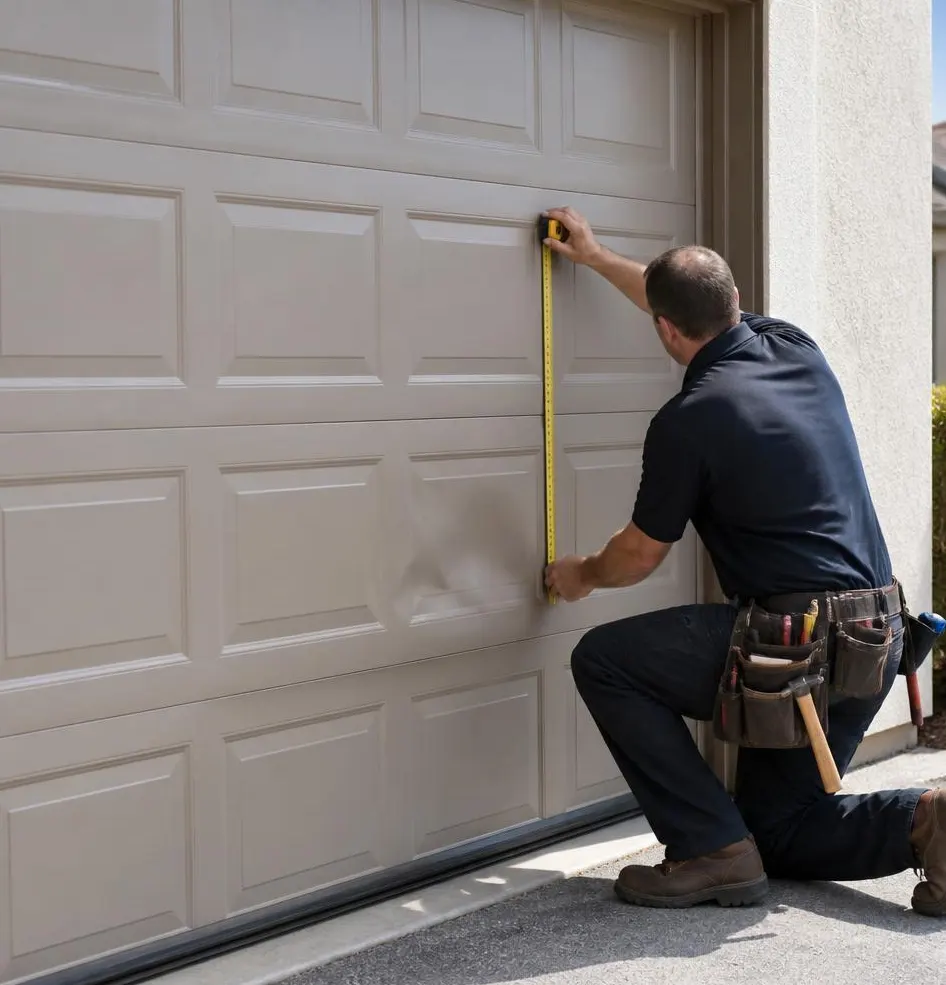
The Mistake Most Homeowners Make First
When the first cold snap hits, a lot of people reach for a can of WD-40 and spray it all over the tracks, rollers, and hinges. It feels productive — it's cheap, it's fast, and the door even sounds quieter for a day or two. The problem is that WD-40 is a solvent, not a lubricant. It strips away whatever grease is left on the hardware, then evaporates, leaving bare metal exposed right as the temperature starts dropping below freezing overnight. A week later the door is grinding worse than before, and now it's doing it in the cold, which is exactly when metal components are already stiffer and more prone to binding. If you're going to lubricate anything before winter, skip the WD-40 and use a silicone-based or lithium grease spray made for garage door hardware. It's worth doing right the first time, because once the ground freezes and salt starts getting tracked into the garage, you don't want to be troubleshooting a door that's already struggling.
Why Winter Is Hard on a Garage Door in This Area
St. Joseph County winters aren't just cold — they're a cycle of freeze, thaw, ice, and salt that repeats for months. Garage doors take a beating from this in a few specific ways: moisture gets into seals and then freezes, metal springs and cables contract and become more brittle, and salt brine tracked in on tires corrodes tracks, hinges, and the bottom of the door panel. Add in the big temperature swings typical of this part of Indiana — a 40-degree day followed by a hard freeze overnight — and you get expansion and contraction that loosens hardware faster than in milder climates. None of this means your door is doomed, but it does mean a fall tune-up actually pays off here more than it would somewhere with a steadier climate.
Check the Weatherstripping First
The rubber seal along the bottom of the door and the strips along the sides are your first line of defense against cold air, snowmelt, and road salt getting tracked into the garage. Walk around the door on a sunny day and look for daylight coming through gaps, cracked or brittle rubber, or sections that have pulled away from the frame. If the bottom seal is flattened or torn, replace it before winter rather than after — it's a low-cost fix that keeps meltwater and salty slush from pooling under the door and freezing it shut overnight.
Test the Spring Balance Before It Gets Brutally Cold
Disconnect the opener by pulling the release cord, then lift the door halfway by hand. A properly balanced door will stay in place; if it drops or shoots upward, the springs are compensating poorly for the door's weight. Cold weather makes springs less forgiving — metal fatigue that was manageable in October can turn into a snapped spring in January, usually on the coldest morning possible. If the balance feels off, that's a sign the spring tension needs adjustment, and torsion springs under tension should always be handled by a technician rather than DIY'd, given how much force they store.
Cables and Rollers
While you're checking the springs, look at the lift cables for fraying and the rollers for cracking or flat spots. Nylon rollers can get brittle in sustained cold, and a roller that's already worn down will struggle more once ice starts forming in the track. If you see rust starting on the tracks from salt exposure, wipe it down and apply that lithium grease to the rollers and hinge points, not the tracks themselves — tracks should stay clean and dry, not greasy.
Check How the Opener Handles Cold
Garage door openers work harder in winter. Cold air makes the motor strain more, and if your opener has a battery backup, cold temperatures drain battery capacity faster, sometimes cutting runtime significantly during a power outage. Test the backup battery now, not during an ice storm when you actually need it. If your opener is older and already struggling — slow starts, hesitation, or needing two tries to close — winter tends to be when that finally turns into a full failure, usually at an inconvenient time.
Think About Insulation If Your Garage Is Attached
If your garage is attached to the house, or you use it as a workspace, an uninsulated door lets a lot of cold radiate into connected rooms and makes the garage itself miserable to work in. Insulated garage doors or retrofit insulation kits won't turn your garage into a heated room, but they do cut down on temperature swings and reduce condensation, which matters for anything stored in there over winter, including a parked car dripping salted slush onto the floor.
When to Call South Bend Garage Door Pro
If your balance test comes back off, if you're hearing new grinding or popping sounds, or if the door has started hesitating or reversing on its own, those are signs worth having looked at before the real cold sets in. Our garage door maintenance visits cover spring tension, hardware wear, track alignment, and weatherstripping condition in one pass, so you're not guessing at what's actually failing. If a spring does let go or the opener dies in the middle of a cold snap, our emergency garage door service is built for exactly that kind of situation, where you need the door operational again the same day, not next week.
If your garage door has been acting up or it's just been a while since anyone's looked at the springs and hardware, give South Bend Garage Door Pro a call. We serve South Bend, Mishawaka, Granger, Osceola, Elkhart, Niles, Roseland, and New Carlisle, and we'd rather help you get ahead of a winter breakdown than fix one at 7am in the snow.