
The Moment You Notice It
It's the sound that starts the argument: you hit the opener button, and instead of the usual smooth rumble, you get a grinding noise, a jerky stop halfway up, or the door just sits there dead. One of you says "that's a landlord problem." The other says "we signed a lease that says tenants handle maintenance." Nobody actually remembers what the lease said, and now you're standing in the garage with your coats on, late for work, arguing about a door neither of you has looked at closely since move-in day.
Here's the plain-language version to settle it, plus what to actually check so this doesn't happen again.
The General Rule of Thumb
Most residential leases split garage door responsibility along the same line used for the rest of the house: the landlord owns the structure and its major systems, and the tenant is responsible for day-to-day use and damage they cause. A garage door usually falls into the "major system" bucket, similar to a furnace or water heater, because it involves springs under heavy tension, an electric opener, and safety sensors.
Usually the Landlord's Job
- Spring failure from normal wear (the coils simply age out and snap)
- Opener motor burning out after years of use
- Track or panel damage from age, rust, or settling of the house
- Replacing a door that's reached the end of its service life
- Safety sensor malfunctions that aren't caused by tenant tampering
Usually the Tenant's Job
- Damage from backing a car into the door or track
- A broken remote or keypad due to tenant misuse
- Debris, leaves, or objects left blocking the sensors
- Reporting problems promptly instead of letting a minor noise turn into a full failure
- Basic care, like not slamming the door or forcing it when it's stuck
The dividing line is intent and cause, not just whose hand was on the button when it broke. A spring snapping on a ten-year-old door is wear and tear. A dented panel from a bumper is tenant responsibility. Read your specific lease, because some landlords shift more maintenance onto tenants in exchange for lower rent, and that's legal as long as it's written down clearly.
What to Inspect at Move-In (Before You Sign Anything)
Most of these arguments exist because nobody checked the door on day one. A ten-minute walkthrough prevents months of finger-pointing.
- Open and close the door manually. Disconnect the opener and lift it by hand. It should move smoothly and stay roughly balanced halfway up. If it crashes down or is hard to lift, the springs are already weak.
- Listen for grinding, popping, or scraping. Rollers and hinges should move quietly. Noise now means a repair is coming soon, and you want that documented as a pre-existing condition.
- Check the springs themselves. Torsion springs sit on a bar above the door; extension springs run along the upper tracks. Look for visible rust, gaps in the coils, or a spring that looks stretched compared to its neighbor.
- Test the auto-reverse safety sensors. Close the door and wave a hand or a broom under it. It should reverse immediately. If it doesn't, that's a safety issue worth raising with the landlord before you move anything into the garage.
- Inspect the weatherstripping along the bottom and sides. Cracked or missing seals let in cold air, meltwater, and road salt brine during winter, which speeds up rust on the tracks and hardware.
- Photograph everything. Dents, rust spots, frayed cables, remote conditions. Date-stamped photos are the single best tool for avoiding a dispute later, whether it's about the garage door or the security deposit.
- Get a copy of any maintenance records the landlord has, including the last time the springs were serviced or the opener was tuned up.
Why This Matters More Here Than in Milder Climates
This area runs through real extremes every year, and a garage door takes the brunt of it. Summers get humid enough to swell wood panels and gum up track lubricant, while winter brings ice, road salt, and temperature swings that make metal contract and springs more likely to snap in cold weather. Spring storm season adds wind-loading stress on wider doors. A door that seemed fine in October can fail hard in January once the cold sets in, which is exactly the kind of timing that turns a simple fix into an emergency call and a heated conversation about whose job it was to notice.
As the weather turns colder in the coming weeks, it's worth doing a quick seasonal check regardless of who's listed as responsible on the lease: listen for new noises, watch how the door balances, and make sure the sensors are still reacting correctly before ice and salt start tracking in on tires and boots.
When to Call South Bend Garage Door Pro
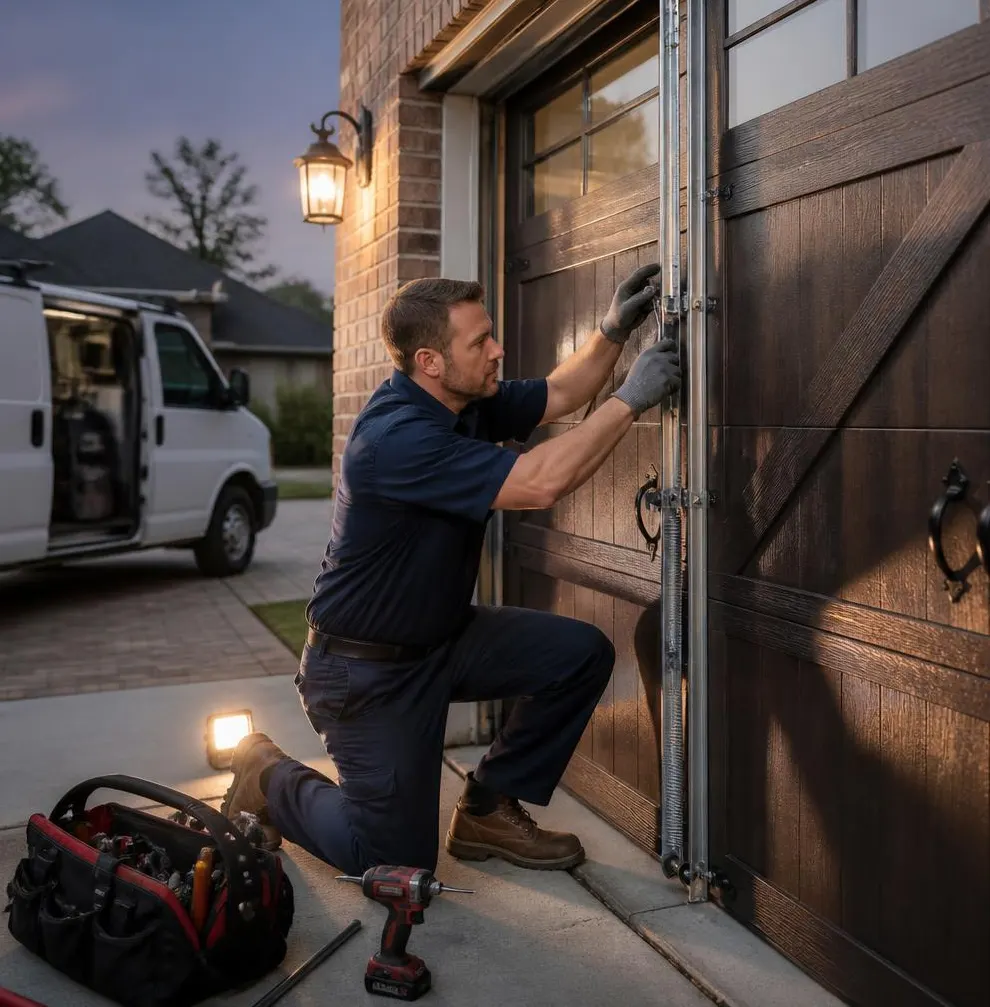
If the door won't open at all, the spring looks broken or gapped, or the sensors stop responding, that's not a weekend DIY project. Springs are under enough tension to cause serious injury, and a misaligned sensor is a safety hazard for kids and pets in the garage. South Bend Garage Door Pro handles spring replacement and garage door repair for homeowners and tenants alike across South Bend, Mishawaka, Granger, Elkhart, and the surrounding area, including emergency service when a door fails at the worst possible time. If you're the one footing the bill as a tenant, a written repair estimate also makes it easy to show your landlord exactly what was wrong and what it cost, which helps settle the responsibility question for good.
If your garage door is making noise, sitting unbalanced, or just not acting right, call South Bend Garage Door Pro for a straight answer and a fair quote before winter makes the problem worse.